
Eileen Quinn: the pregnant mother-of-three murdered by Crown forces
The murder of Eileen Quinn, a pregnant mother-of-three, perpetrated by forces of the Crown
Pádraig mac Aodha
7/21/20265 min read
Countless atrocities committed by the forces of the Crown have gone to time, with no justice delivered — acts of colonization, cultural erasure, subjugation, theft, and murder against native peoples of lands to which the British had no rightful claim to.
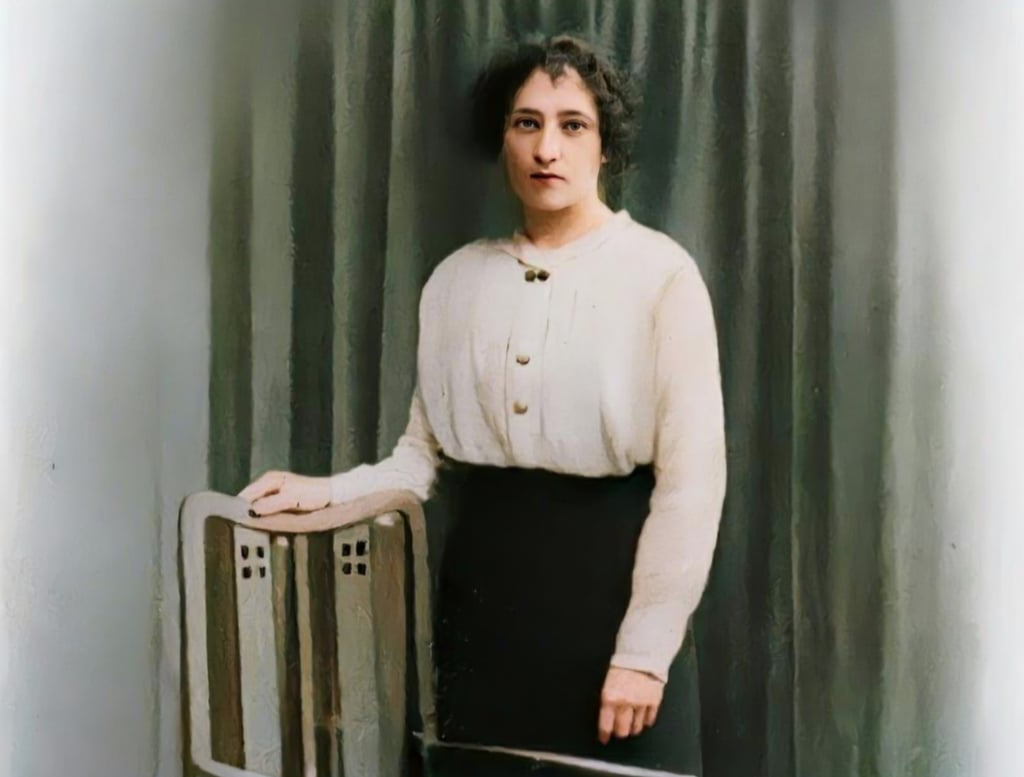
Among these — in the near endless list of atrocities — is the case of Eileen Quinn, a pregnant mother of three, who was holding her nine-month-old child as she was shot.
Born Eileen Gilligan on April 12th, 1895, in County Galway to Martin and Mary Gilligan, she grew up in the rural farming community of Kiltartan.
In 1917, she married local farmer Malachy Quinn, and by November 1920 they had three children together — Alfie (aged 3), Tessie (aged 9), and Eva (aged 4) — with a fourth on the way. They lived on a farm near Gort, a barracks town heavily occupied by British soldiers and police — in which there would soon be more than one atrocity. Neither she nor her husband were involved in the War of Independence, which raged on, but history would soon tie her name to it.
On October 30th, 1920, the IRA’s South Galway Brigade ambushed a Royal Irish Constabulary patrol in Castledaly, killing Constable Timothy Horan and wounding another officer. In response, Crown forces began arresting and searching for suspected republicans. Amidst the fear and rising tensions, Eileen became an unsuspecting target of a reprisal.
On November 1st — All Saints’ Day — the morning seemed ordinary. Eileen — seven months pregnant — was at home, waiting for her husband’s return from an ongoing fair in Gort. At around 3PM, Eileen was sat on the front wall of her garden — which directly faced the main Gort-to-Galway road — cradling nine-month-old Tessie beside her two other children.
Two motor lorries laden with Auxiliaries of the RIC — who had earlier fired shots in Gort's main square — drew by on the aforementioned Gort-to-Galway road. As they passed by, one of its occupants — an Auxiliary — shot a bullet directly at Eileen, piercing through her stomach.
The infant slipped from her grasp as she collapsed. With her remaining strength, she managed to crawl towards the doorsteps to her home — leaving a trail of blood — and exclaimed, “Take in the little children!'' One cannot imagine the terror both Eileen and her children had to endure.
A domestic servant girl — who worked on the Quinn farm — was the first to hear Eileen's call and helped bring her into the house, tending to the children, then sounding an alarm. Local women rushed to assist her, the children and the unborn child before a messenger called for two doctors — Dr Sandys and Dr Foley. The doctors rushed to the Quinn farmhouse, where Dr Sandys recalled seeing a gruesome and harrowing site, ''She had bled so much that she could bleed no more.''
Malachy, Eileen's husband, was still at the fair in Gort when he was informed of the shooting. Immediately, he ran to the home of Father John Considine, in tears, and requested spiritual aid for his wife. Together, they hurried to the farmhouse and traced a trail of blood to the kitchen — where both men saw Eileen in agony, surrounded by many.
Father John Considine remained at her side for a long 7 hours. During these hours, she communicated with him extensively, confirming the details of who had shot her. At 10:30 PM — when her condition had deteriorated sharply — those gathered in the house knelt, recited prayers for the dying and the Rosary.
The RIC district chief constable visited their home but refused to take a formal deposition from Eileen on what had happened — thereby preventing her testimony from entering official records — which would have identified that a member of the D Company of the Auxiliaries was responsible.
A telegram was sent to Surgeon O'Malley but, unfortunately, he was unable to secure a motorcar and — by the time he managed to — Eileen, with her unborn child, had already passed away.
A British Military Court of Inquiry convened in Gort, arriving at the conclusion that the the incident was a ''Death by Misadventure'' and validated crown testimony which claimed that the bullet was fired as a ''precautionary measure'' by the troops who were ''anticipating an ambush around the corner''.
Quite frankly, the verdict which this folly court delivered makes me, and should be enough to make anyone, feel sick. A young, pregnant mother was fatally shot and they did not care whatsoever, and it only gets worse when we reach the House of Commons in which the case was brought up.
The ''Secretary for Ireland'' — I use quotes there and after as I do not recognize such a title and especially when it is given to such a vile character — ''Sir'' Hamar Greenwood, was repeatedly pressed on the matter by Members of Parliament and he justified the shooting, ''I cannot consider that any road in a disturbed area — and this was a disturbed area — is a road on which the troops or police are not justified in taking every precaution for their own safety.''
I cannot — and I refuse to ever — see how shooting at a woman with a baby in her arms and surrounded by her other children ensures the safety of the troops, nor am I willing to take it as a ''precautionary measure''. No, this was a direct reprisal for the ambush I detailed earlier.
As for justice, it was never delivered. No one was ever charged or identified for the murder of Eileen and her unborn child. Only an ex gratia payment of £300 was offered to Malachy but, of course, no amount of money could possibly make up for the loss of his wife and unborn child and to live knowing the perpetrator was out there — free from any level of justice — must have been awful.
May they all rest in peace.
To end this article, I'd like to share a brilliant poem by W.B. Yeats entitled ''Reprisals'' which he wrote in 1920 after hearing of Eileen Quinn's murder, in criticism of the actions of the British, but was withheld from being published at the request of Lady Gregory — whose son, Major Robert Gregory, who died in World War I, is referred to in the poem. Officially, it was not published until 1948.
Reprisals
Some nineteen German planes, they say,
You had brought down before you died.
We called it a good death. Today
Can ghost or man be satisfied?
Although your last exciting year
Outweighed all other years, you said,
Though battle joy may be so dear,
A memory, even to the dead,
It chases other thought away
Yet rise from your Italian tomb,
Flit to Kiltartan cross and stay
Till certain second thoughts have come,
Upon the cause you served, that we
Half-drunk or whole-made soldiery
Are murdering your tenants there.
Men that revere your father yet
Are shot at on the open plain.
Where may new-married women sit
And suckle children now? Armed men
May murder them in passing by
Nor law nor parliament take heed.
Then close your ears with dust and lie
Among the other cheated dead.