
The Atrocities Sir Roger Casement Exposed In The Congo
Detailing the Belgian atrocities in the Congo that Sir Roger Casement uncovered in his 1904 report.
Pádraig mac Aodha
7/24/20264 min read
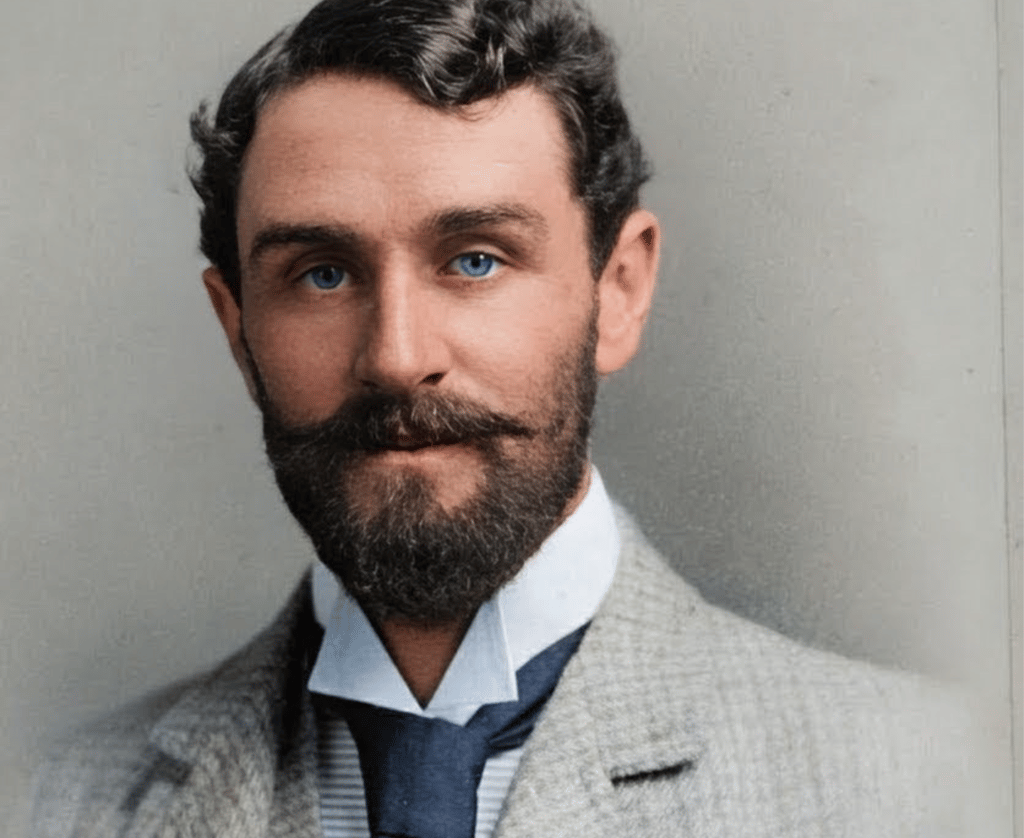
Sir Roger David Casement — born in County Dublin on September 1st, 1864 — was executed for the offence of treason and labelled a traitor to the Crown after landing in County Kerry from a German submarine as part of Germany's efforts to support the Easter Rising of 1916. His attempt to secure German rifles for the Rising is a story in and of itself and one I soon hope to tell but, in today's article, I'll be delving into his humanitarian work outside of Ireland.
He was granted the title of "Sir" Roger Casement, and made a Knight Bachelor — the most basic rank of knighthood dating back to the 13th century — by King George V, the same man he was later accused of betraying.
The reason as to why he was granted such a title is thanks to his exceptional work as a British consular officer — a civil servant who worked abroad protecting British commercial interests, reporting on local political and economic conditions, and assisting British subjects — a role he obtained after years working in Africa, where his deep knowledge of the region enabled him to expose colonial atrocities.
In 1904, a report authored by Sir Roger was published, exposing the extreme atrocities committed by the Force Publique — the military force of the Congo Free State — under the reign of King Leopold II, who held the Congo Free State as his personal possession and acted as its sole owner. In 1885, it was officially recognized as such by various European powers at the Berlin Conference. King Leopold II even went as far as to set aside a vast amount of the territory he controlled for his own direct, personal profit. Part of how he gained control of such a vast territory was by promising to eradicate slavery, yet you'll soon see the bitter irony of his promise.
As to how he obtained this profit, he used slavery in everything but name. International agreements committed Leopold II, and the other European powers, to suppress the slave trade. However, if there's a will, there's a way, and unfortunately, in this case, he found loopholes — a way.
These loopholes included kidnapping men, women and children from villages and then holding the women and children hostage until the men — who could be away for months or never come back at all — fulfilled the rubber quotas; if these quotas were not met, the hostages — who were already not being fed, or, for some, not fed well enough, given no shelter, or had seen those around them, their children, siblings or parents, die of disease, hunger, dehydration or murder in captivity — had a horrific range of punishments coming their way. The aforementioned punishments could be anything from being whipped — the whip, the chicotte, made from hippopotamus hide —, raped or killed.
In addition to those horrors, Sir Roger documented, through witness testimony, the severing of hands. Force Publique soldiers were required to account for every cartridge they fired by producing the severed right hand of the person they claimed to have killed. In practice, however, this system was grotesquely abused, with hands being cut from innocent victims and, in some cases, even from those who were still alive.
Another of King Leopold II's loopholes was forced military recruitment. The Force Publique was made up mostly of native Congolese men, many of whom it was claimed were slaves who had been liberated. Why? Well, because they'd been bought from slave traders. Yet, they were simply thrown into another form of servitude through forced military service, one they were given no real choice but to endure.
For villages that simply refused, resisted or regularly failed to meet quotas, their crops were destroyed, their homes burned to the ground, effectively rendering the entire village uninhabitable — causing widespread displacement. Another method was to execute prominent members within the villages, to scare all of those remaining into submission. For you to be killed, you didn't even have to resist yourself. Many were executed indiscriminately.
One of the many findings in Sir Roger's report was that areas which had once been densely populated were now virtually abandoned. By the time he had been sent by the British Government to investigate what exactly had been happening in the Congo Free State, millions had already died.
However, Sir Roger's report cannot be understated simply because the atrocities had already been committed. On the contrary, it exposed the ins and outs of the barbarity the Congolese had been subjected to. For two decades, a system of pure evil had existed. Now, with Sir Roger's documentation of what he'd seen and the testimonies he noted, rumours of what was occuring were now solidified by an official report and a British government investigation.
Following the report's publishing, King Leopold II faced immediately scrutiny — on an international level. In an attempt to kick it all under the carpet, he began his own inquiry... into himself. As the joke goes, "I have investigated myself and found no wrongdoing." Well, it didn't work. Laughably, Leopold's own judges he'd appointed on the inquiry actually did their jobs and, once it reached its completion, they found exactly what Sir Roger had. By 1908 the pressure became so high that the Belgian Parliament annexed the Congo Free State, revoking Leopold's ownership altogether.
Whilst things in the Congo Free State were addressed to a certain degree, thanks to Sir Roger's report, such as the hostage-taking, the indiscriminate killings, and the quotas, it did not bring freedom to the Congolese people; lack of any political rights, racial segregation, forced labour, and the extraction of the Congo's resources, all continued to exist for decades.
It was not until 1960 that the Belgian Congo gained independence..